
ERREPI NetPower 1500 R
This line-interactive UPS delivers 1350 watts of pure sine wave power for optimal protection of sensitive electronics. Its flexible design allows use as a compact tower unit or low-profile installation in a standardized rack.
This line-interactive UPS delivers 1350 watts of pure sine wave power for optimal protection of sensitive electronics. Its flexible design allows use as a compact tower unit or low-profile installation in a standardized rack.
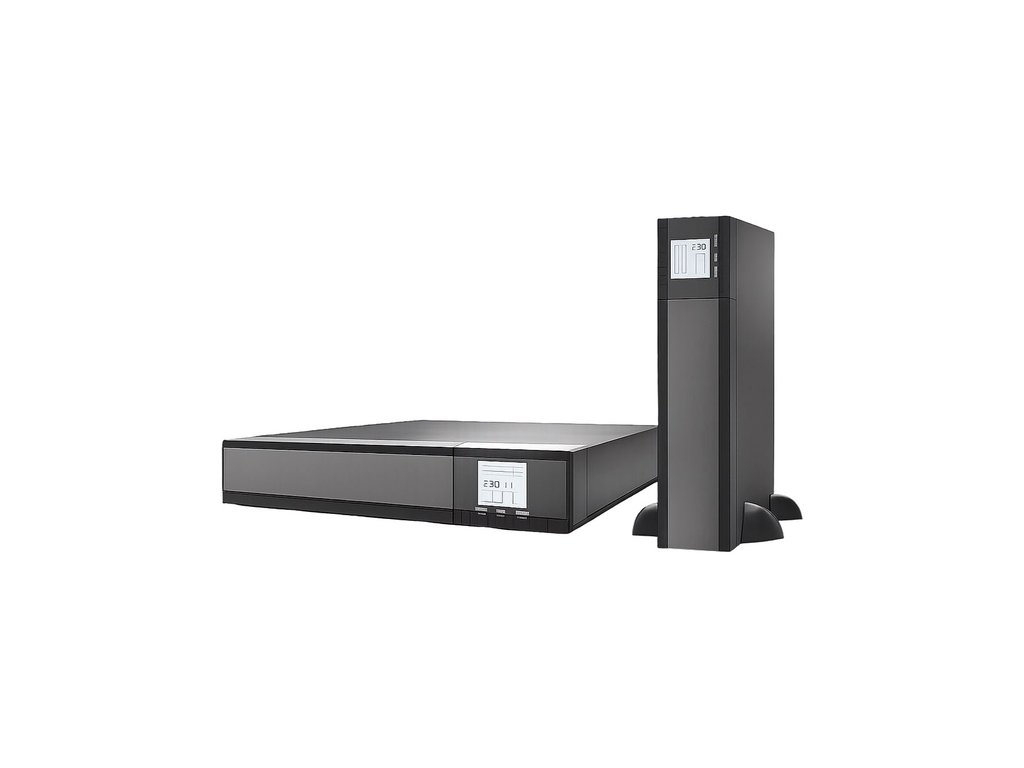

This high-quality uninterruptible power supply (UPS) operates on the proven line-interactive principle, efficiently compensating for voltage fluctuations in the power grid. With a robust capacity of 1500 VA (1350 watts), the system delivers a pure sine wave output in both normal mains and battery modes, ensuring the trouble-free operation of sensitive power supplies and modern hardware. Maintenance-free lead-acid batteries inside the unit take over the power supply immediately in the event of an outage. An integrated USB interface and the included management and shutdown software allow for convenient status monitoring and the initiation of a controlled shutdown for connected systems. Featuring a 2U form factor and dimensions of 438 x 510 mm, the housing is optimally sized for either stable standalone placement or installation in a 19-inch rack. The unit can be flexibly adapted to evolving needs through optional add-ons such as an SNMP adapter, dry contact relays, or additional external battery modules. With a solid total weight of 19.5 kg, this UPS serves as a reliable foundation for a stable and controlled power supply.
Always observe basic safety regulations when installing and using the UPS system. Since life-threatening voltage levels exist within the system, the IP20-rated enclosure must only be opened by qualified service personnel. Ensure that the system is properly grounded and operated within a compatible TN, IT, or TT power system. Before proceeding, verify that the specifications on the nameplate match your power grid and the total power consumption of the connected equipment. To prevent fire hazards, the unit must only be connected to a circuit protected by an easily accessible circuit breaker (rated 20A, trip curve C). For hardwired systems, an external disconnect switch is required, whereas for pluggable units, the power outlet must be located in the immediate vicinity and be easily accessible. Always follow all connection and operating instructions in the manual in the exact order specified. Select the installation site for the UPS carefully. The system must never be installed near liquids, in excessively humid environments, in direct sunlight, or near heat sources. Ensure that no foreign objects enter the unit and that the ventilation grilles remain unobstructed to allow for adequate cooling. If temporary storage is required, it must take place in a dry location. Permissible storage temperatures range from -25°C to +55°C without batteries and from 0°C to +40°C with batteries; however, temperatures below 25°C are recommended for optimal battery life. Exercise particular caution when handling the installed batteries, as they contain small amounts of toxic substances and pose a risk of electric shock and high short-circuit currents. Maintenance must only be performed or supervised by personnel familiar with the necessary safety precautions. When replacing batteries, the exact same type and number of batteries must be used, as using incorrect models poses a risk of explosion. Under no circumstances may batteries be disposed of in a fire, opened, or mechanically destroyed. The electrolyte released in such cases is toxic and can cause severe chemical burns to the skin and eyes. Always dispose of used batteries properly and in accordance with applicable legal regulations.
This product and the batteries contained within it are subject to strict European and national environmental regulations; under no circumstances should they be disposed of with ordinary household waste at the end of their service life. The crossed-out wheeled bin symbol on the device indicates that the UPS unit must be collected separately from unsorted municipal waste. Please take the discarded device to an official municipal collection point—such as a recycling center—or return it to an electronics retailer or the manufacturer for proper recycling. Remember to reset any network-enabled management cards to factory settings beforehand to erase any stored network configurations. The lead-acid batteries installed in the UPS require special attention, as they contain toxic heavy metals and corrosive acids that can cause serious environmental damage if disposed of improperly. If possible, remove the batteries from the unit before disposal and place them in a separate battery collection stream. Used industrial batteries can be returned free of charge to the manufacturer, the distributor, or specialized take-back systems. To prevent short circuits and associated risks of fire or explosion, be sure to tape over exposed battery terminals with insulating tape before transport. Packaging materials should also be recycled properly for the sake of the environment: dispose of cardboard and paper in the paper recycling bin, while plastic film, Styrofoam, and plastic strapping belong in the appropriate recycling collection (such as the "Yellow Bag" or "Yellow Bin" systems).
| Product data | |
|---|---|
| Product number | USV-T0015-GT002 |
| Unit | pc |
| Electrical basics | |
| Apparent power | 1500 VA |
| Active power | 1350 W |
| Topology | Line-Interactive |
| Battery-mode output waveform | Pure sine wave |
| Input connection | 230 |
| Output connections | 230 |
| Battery & runtime | |
| External battery optional | Yes |
| Mechanical & installation | |
| Form factor / mounting standard | 19-inch rack |
| Rack units | 2 HE |
| Abmessungen (B x H x T) | 438 x 88 x 510 mm |
| Net weight | 19.5 kg |
| Interfaces & monitoring | |
| USB interface | Yes |
| SNMP optional | Yes |
Accessories and service
A line-interactive UPS continuously monitors incoming mains voltage and automatically compensates for voltage fluctuations. During a power outage or a major power disturbance, the system switches to battery operation within a very short time and continues to supply power to connected devices.
This UPS is ideal for office workstations, home office setups, network components, point-of-sale systems and small server environments. It protects sensitive electronic devices from power outages, voltage fluctuations and other disturbances in the mains supply.